


Put two bowls in front of most cats and the decision takes about four seconds. One holds kibble that rattles; the other holds soft food that smells like meat. Cats usually choose the wet food, and for many of them that instinct lines up with what their bodies need. But wet food isn't automatically better, and dry food isn't the villain it's sometimes made out to be. What matters is what's inside the can or bag, what your cat will actually eat, and what your schedule and budget can realistically support.
Why Water Is the Real Difference
Cats descended from desert hunters. They evolved to get most of their moisture from prey, and their thirst drive is famously weak. A cat that would benefit from drinking more water often simply doesn't feel like it. That's the core of this whole debate.
Wet food is roughly 75 to 80 percent water. Dry kibble sits closer to 10 percent. A cat eating only kibble may take in a fraction of the water she'd get from a mouse-shaped diet, and mild chronic dehydration puts steady pressure on the kidneys and urinary tract. It doesn't mean every kibble-fed cat develops problems, but it does mean moisture is the single biggest practical difference between the two formats — bigger than protein percentages, bigger than grain content.
What Wet Food Does Well
Wet food's strengths stack up neatly:
- Hydration without effort. Your cat gets water with every bite, whether she drinks from the bowl or not.
- Protein-forward recipes. Because there's so much water, the dry matter that remains is usually high in animal protein and lower in carbohydrates than kibble.
- Portion control. Cans and pouches come in fixed sizes, which makes measuring simple. The volume also fills a cat up, which helps with weight loss.
- Picky and senior cats. Strong aroma and soft texture work well for cats with a dulled sense of smell, sore gums, or missing teeth.
The trade-offs are real, though. Wet food costs more per calorie, and once a can is open it shouldn't sit out for long. Some recipes are mostly gravy, thickeners, and vaguely named proteins — a pâté with a named meat near the top of the list is usually the better buy than a shredded style swimming in sauce. And no, wet food doesn't clean teeth, but neither does kibble in any meaningful way. A cat's teeth are built for shearing meat, not crunching biscuits.
What Dry Food Does Well
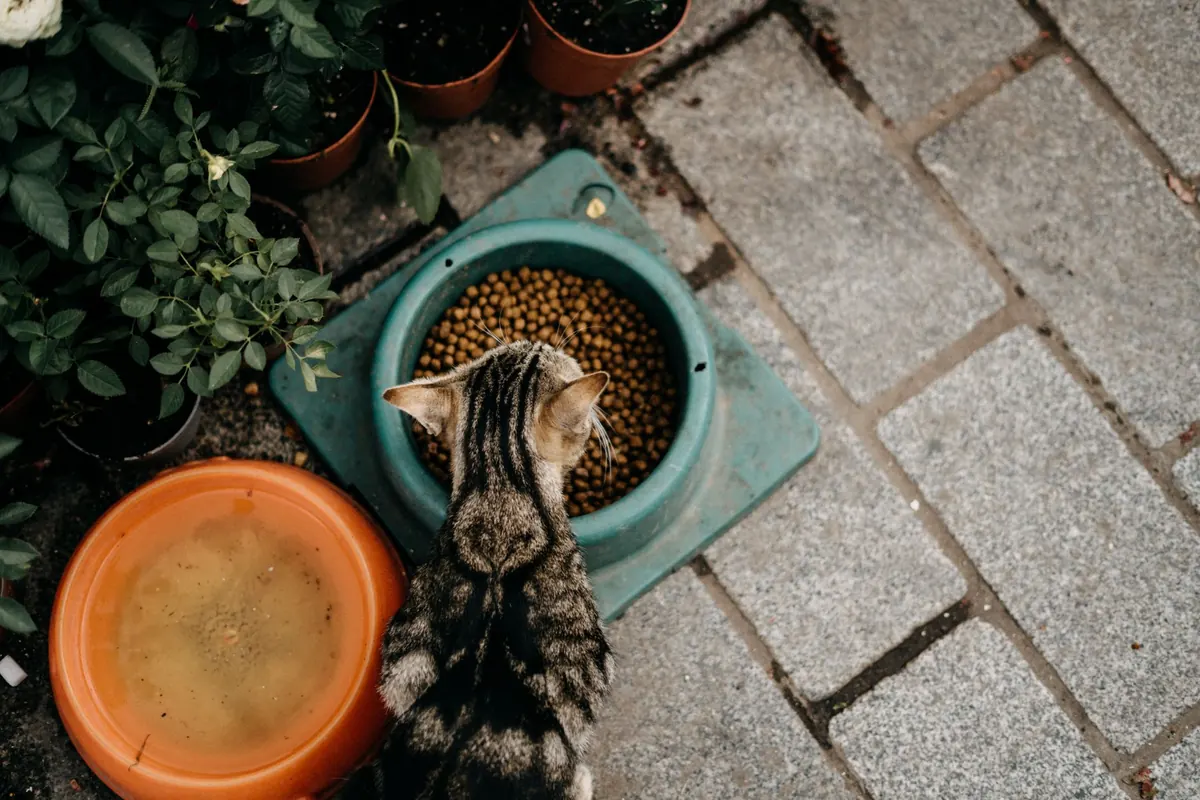
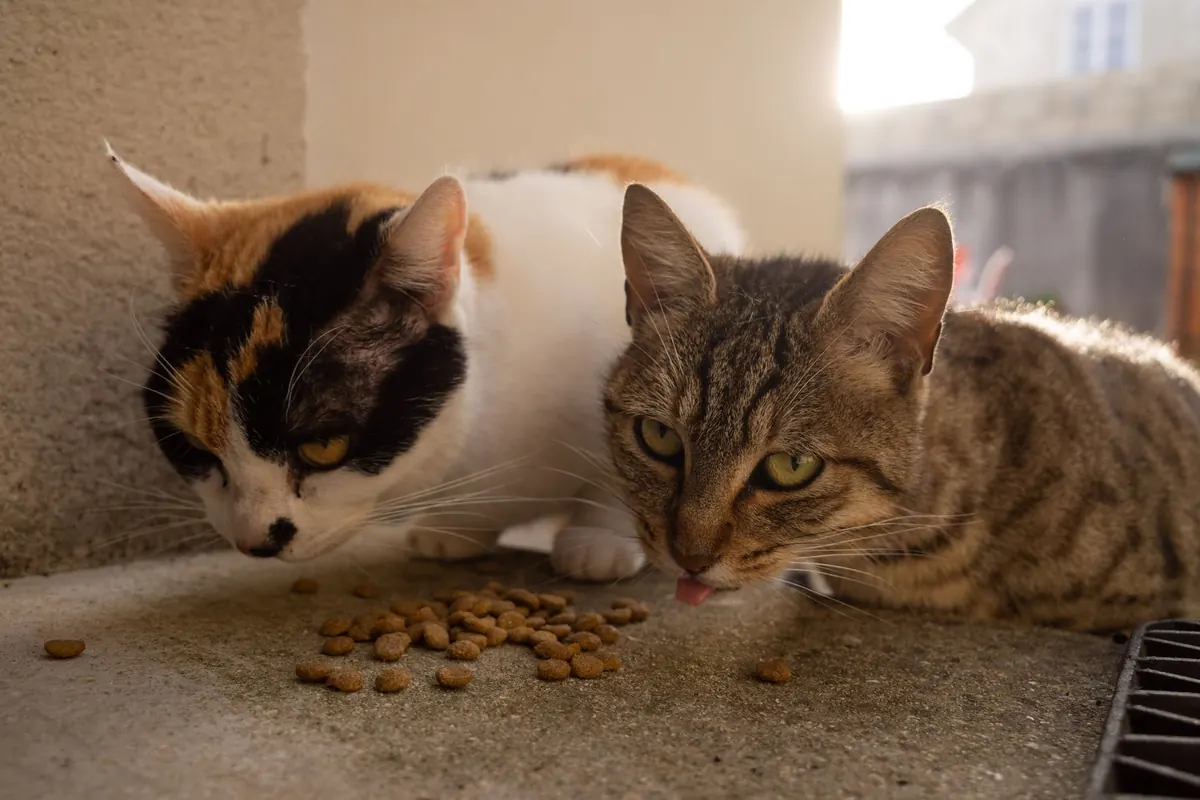
Kibble earns its place for honest reasons. It's inexpensive, shelf-stable, and can be left in a bowl for a grazer or split between cats on different schedules. It travels well, works in puzzle feeders, and doesn't smell like a fish counter. For a multi-cat household or someone working long shifts, that convenience is not trivial.
The catch is calorie density. A small handful of kibble can carry as many calories as a much larger-looking portion of wet food, so free-feeding dry food is one of the most common reasons cats drift overweight. Dry food also stales, and a bag left open for months loses aroma — which is often why a cat suddenly turns up her nose at a food she used to love.
Compare Them Fairly: Read the Numbers
The guaranteed analysis on the label is measured "as fed," which means the water content skews everything. Wet food looks low in protein only because most of the can is water. To compare like with like, convert to dry matter basis:
- Find the moisture percentage on the label.
- Subtract it from 100. That's the dry matter.
- Divide the protein percentage by the dry matter, then multiply by 100.
Say a canned food lists 9 percent protein and 78 percent moisture. Dry matter is 22 percent, so protein on a dry matter basis is about 41 percent. A dry food listing 32 percent protein and 10 percent moisture works out to roughly 36 percent. The wet food is actually the more protein-dense of the two — a result that surprises most people the first time they run the math.
Ingredients matter too, but less than the internet suggests. Look for a named animal protein in the first few slots, a "complete and balanced" statement on the label, and taurine in the guaranteed analysis. Organ meats and by-products aren't filler; they're nutrient-dense parts of a natural diet. "Grain-free" is a marketing term, not a health guarantee.
Which Format Fits Your Cat?
There's no universal answer, but some situations tilt the decision:
- Kittens: they need calorie-dense, nutrient-rich food and can handle either format in small, frequent meals.
- Overweight cats: wet food usually makes portion reduction easier because the volume still feels like a meal.
- Urinary or kidney concerns: moisture is your ally, so most vets lean toward wet.
- Diabetes: diet is part of management, and it should be planned with your veterinarian — never changed abruptly on your own.
- Budget-tight or time-tight homes: a good-quality kibble beats a cheap wet food your cat refuses to eat.
Any cat with a diagnosed condition — kidney disease, diabetes, urinary crystals, allergies, thyroid issues — needs a feeding plan from a veterinarian who knows her history. General advice goes only so far.
A Practical Approach
For most healthy adult cats, a mixed routine works beautifully: a measured portion of wet food morning and evening, with a small amount of kibble in a puzzle feeder or scattered for foraging during the day. You get hydration and satisfaction from the wet food, plus flexibility from the dry. Measure the kibble — use an actual measuring cup or a kitchen scale, not a coffee mug.
Switch formats gradually over seven to ten days, mixing increasing amounts of the new food into the old, so you don't trigger a digestive upset or a hunger strike. Keep dry food sealed and use it within about a month of opening, refrigerate unused canned portions in a covered container for a couple of days at most, and serve both at room temperature to keep the aroma appealing. Offer fresh water daily in wide, shallow bowls placed away from the litter box; many cats drink more from a fountain.
Watch the litter box, the coat, and the body condition rather than the marketing on the bag. If your cat is urinating more or less, losing or gaining weight without a diet change, or vomiting regularly, that's a vet visit, not a food swap. The best food, in the end, is a complete and balanced one your cat eats willingly and that you can keep feeding for years.
Photo: Bingqian Li / Pexels